How Does a Septic Tank Work? A Simple Guide With Diagram
A septic tank works by holding household wastewater long enough for solids to sink to the bottom and fats and oils to float to the top, then sending the clearer liquid in the middle out to a drain field, where the soil finishes cleaning it. Nothing in the system needs...

A septic tank works by holding household wastewater long enough for solids to sink to the bottom and fats and oils to float to the top, then sending the clearer liquid in the middle out to a drain field, where the soil finishes cleaning it. Nothing in the system needs electricity in the most common setup—gravity, time, bacteria and soil do the work.
- 1. The Short Version: 4 Stages of a Septic System
- 2. What Happens Inside a Septic Tank?
- 2.1. 1. Scum (top layer)
- 2.2. 2. Effluent (middle layer)
- 2.3. 3. Sludge (bottom layer)
- 2.4. Why the layers stay put: baffles and T-pipes
- 3. How Long Does Wastewater Stay in the Tank?
- 4. How Does the Drain Field Work?
- 5. Gravity Systems vs. Systems With a Pump
- 6. Other Types of Septic Systems
- 7. What Do Bacteria Do in a Septic Tank?
- 8. How Often Does a Septic Tank Need to Be Pumped?
- 9. Warning Signs Your Septic System Isn’t Working
- 10. How to Keep Your Septic System Working
- 10.1. Do
- 10.2. Don’t
- 11. Frequently Asked Questions
- 11.1. Does a septic tank need electricity?
- 11.2. Where does the water go from a septic tank?
- 11.3. Can a septic tank overflow?
- 11.4. How long does a septic system last?
- 11.5. Is it safe to use a garbage disposal with a septic system?
- 12. The Bottom Line
- 12.1. Sources
If your home isn’t connected to a city sewer, this is almost certainly what handles everything that goes down your drains. Millions of U.S. homes rely on septic systems, yet most owners never see theirs until something goes wrong. This guide walks through the whole process step by step, explains what is happening inside the tank, and shows the simple habits that keep a system working for decades.
The Short Version: 4 Stages of a Septic System
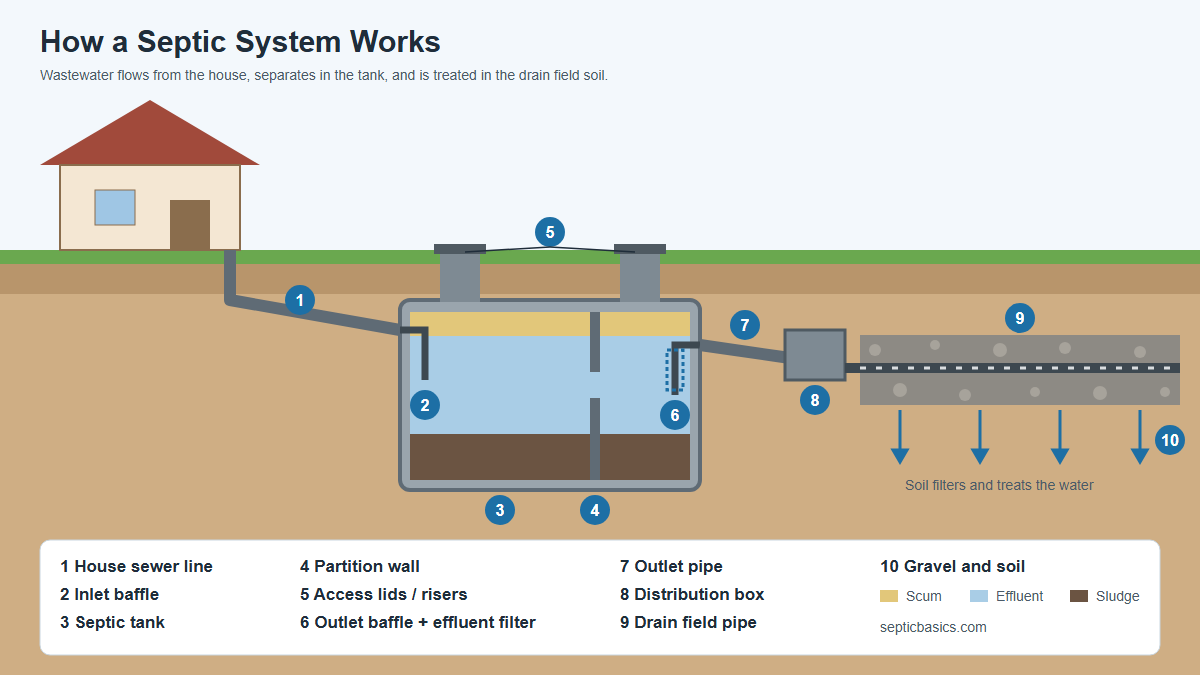
Every conventional septic system moves wastewater through the same four stages:
- Collection. All drains in the house—toilets, showers, sinks, dishwasher and washing machine—flow into one main sewer pipe that leaves the house.
- Separation in the tank. The pipe empties into a buried, watertight septic tank. Heavy solids settle, light materials float, and bacteria begin breaking down organic matter.
- Distribution. The partly treated liquid, called effluent, leaves the tank and flows to the drain field (also called a leach field).
- Soil treatment. Effluent seeps out of perforated pipes into gravel and soil. As it trickles down, the soil filters it and naturally removes many harmful bacteria, viruses and nutrients before the water reaches groundwater.
| Stage | Where it happens | What it does |
|---|---|---|
| 1. Collection | House plumbing and main sewer line | Gathers all household wastewater in one pipe |
| 2. Separation | Septic tank | Solids sink, grease floats, bacteria digest waste |
| 3. Distribution | Outlet pipe and distribution box | Sends liquid effluent evenly to the field |
| 4. Treatment | Drain field and soil | Filters and purifies water as it soaks in |
What Happens Inside a Septic Tank?
A septic tank is a large buried container, usually made of concrete, fiberglass or polyethylene plastic. It has an inlet pipe on one side and an outlet pipe on the other. Once wastewater enters, it slows down and sits still, and that stillness is what makes separation possible.
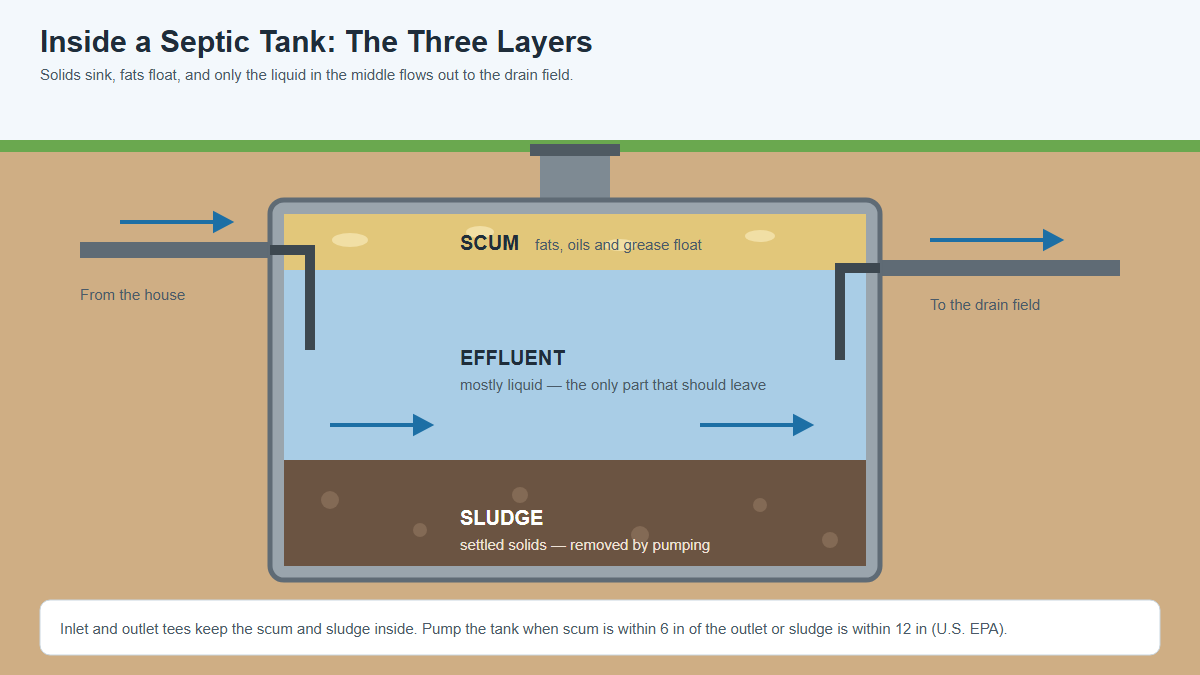
Over time, the contents settle into three distinct layers.
1. Scum (top layer)
Fats, oils, grease and anything lighter than water float to the surface and form a crust called scum. Cooking grease poured down the kitchen sink ends up here.
2. Effluent (middle layer)
The middle of the tank is mostly liquid. This clarified wastewater is the only part that is supposed to leave the tank. It still contains dissolved waste and germs, which is why it needs the drain field.
3. Sludge (bottom layer)
Heavier solids sink and build up as sludge. Bacteria that live without oxygen (anaerobic bacteria) slowly break down part of this material, but they can’t digest all of it. That leftover sludge is the reason every tank eventually has to be pumped.
Why the layers stay put: baffles and T-pipes
The inlet and outlet usually have baffles or T-shaped fittings that reach down into the middle layer. The outlet draws liquid only from the middle, so floating scum and settled sludge stay trapped in the tank. Many tanks also have two compartments, which gives solids a second chance to settle. Some newer tanks include an effluent filter on the outlet—a screen that catches small particles before they can clog the drain field. If your tank has one, it needs to be cleaned periodically.
How Long Does Wastewater Stay in the Tank?
The tank is sized so that wastewater stays inside long enough for solids to separate—generally a day or more. Every time water enters the tank, a similar amount of effluent is pushed out the other side. This is why tank size matters: a tank that is too small for the household pushes wastewater out before it has settled, sending solids toward the drain field.
Local health codes set the minimum tank size, usually based on the number of bedrooms rather than the number of people. A three-bedroom home commonly has a tank of around 1,000 gallons, but the exact requirement varies from state to state and county to county.
How Does the Drain Field Work?
The drain field is the part of the system that actually cleans the water. It is a set of shallow trenches or beds in the yard, filled with gravel or plastic chambers, with perforated pipes running through them. The whole field is covered with soil and grass.
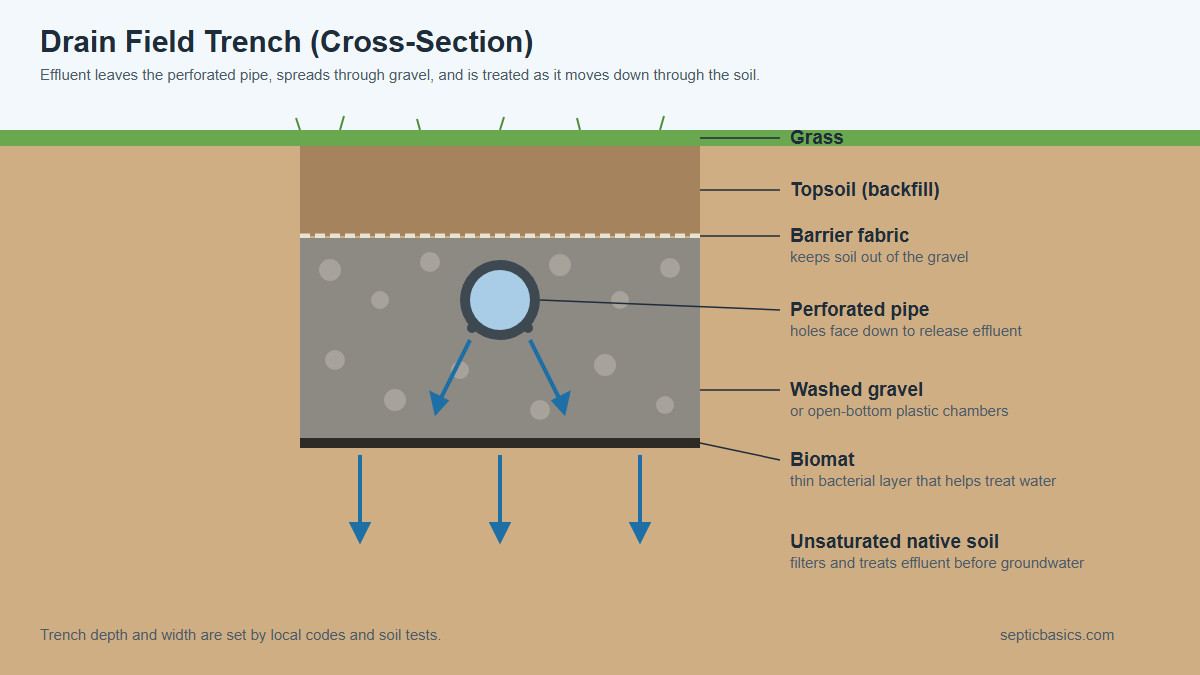
Here is what happens once effluent leaves the tank:
- Even distribution. Effluent first flows into a distribution box (or a pump chamber), which splits it among several trench lines so no single area is overloaded.
- Slow release. The liquid trickles out of holes in the pipes and spreads through the gravel or chambers.
- Natural filtering. As water moves down through unsaturated soil, a thin biological layer forms that traps particles, and soil microbes break down many remaining contaminants.
- Return to groundwater. By the time the water has passed through enough soil, it has been treated and rejoins the groundwater.
The drain field depends on healthy, unsaturated soil. If it receives too much water, or water full of solids, it floods. That is when you see soggy ground, sewage odors, or wastewater backing up into the house.
Gravity Systems vs. Systems With a Pump
In a conventional system, everything flows downhill by gravity, and there are no moving parts. When the drain field sits higher than the tank, or the soil requires wastewater to be spread more evenly, the system adds a pump.
| Feature | Gravity system | Pump (pressure) system |
|---|---|---|
| How effluent moves | Flows downhill on its own | Pump pushes effluent to the field in doses |
| Electricity needed | No | Yes |
| Extra parts | Distribution box | Pump chamber, pump, float switches, alarm |
| Typical use | Flat or downhill lots with good soil | Uphill fields, shallow soil, mound systems |
| Main extra upkeep | Very little | Pump and alarm checks |
If your system has a pump, it will also have a high-water alarm. When that alarm sounds, cut back on water use right away and call a septic professional.
Other Types of Septic Systems
The conventional tank-and-field design is the most common, but poor soil, a high water table, or a small lot can require something different. Common alternatives include:
- Mound systems – the drain field is built above ground in a raised mound of sand where native soil is too shallow.
- Aerobic treatment units – small treatment plants that inject air so oxygen-loving bacteria can break waste down more completely.
- Sand filter systems – effluent passes through a sand-filled chamber for extra treatment before reaching the soil.
- Chamber systems – plastic chambers replace gravel in the trenches, which is useful where gravel is scarce.
Each of these still follows the same principle: separate the solids, then treat the liquid before it returns to the ground.
What Do Bacteria Do in a Septic Tank?
Bacteria are the quiet workers of the system. Every flush brings in new microbes that feed on organic waste in the tank. They reduce the volume of solids and help produce cleaner effluent.
Bacteria are also why some household products can cause problems. Large amounts of bleach, antibacterial cleaners, solvents or medications can kill these microbes and slow down digestion. Normal household use of cleaning products is generally fine; it is heavy, repeated use that becomes a concern.
In most homes, the system receives all the bacteria it needs from normal use. Before buying bacteria additives, check our guide to septic tank treatments and additives.
How Often Does a Septic Tank Need to Be Pumped?
Most household septic tanks need to be pumped every three to five years. The U.S. Environmental Protection Agency recommends having the system inspected by a professional at least every three years. Systems with pumps, float switches or mechanical parts should be checked more often.
The right schedule depends on four things:
- The size of the tank
- The number of people in the home
- How much wastewater the household produces
- How many solids go in (garbage disposals add a lot)
A professional decides when to pump by measuring the layers. A common rule of thumb is that a tank is due for pumping when the scum layer comes within about six inches of the bottom of the outlet, or the sludge layer rises to within about twelve inches of the outlet. For more detail, see septic tank pumping: how often and what happens.
Warning Signs Your Septic System Isn’t Working
Because the system is underground, problems often show up indirectly. Watch for these signs:
- Slow drains in sinks, tubs or showers throughout the house
- Gurgling sounds in the plumbing
- Sewage odors inside or around the house—see sewage smell in house: causes and fixes
- Wastewater backing up into toilets or floor drains
- Soggy ground or standing water over the drain field
- Unusually bright green, lush grass over the field, even in dry weather
If you notice any of these, reduce water use and contact a licensed septic professional. Problems caught early are far cheaper to fix than a failed drain field.
How to Keep Your Septic System Working
A well-maintained system can last for decades. Most of the effort comes down to what goes into it and how much water it receives.
Do
- Have the system inspected regularly and pumped when needed.
- Keep records of inspections, pumping and repairs, along with a sketch of where the tank and field are located.
- Spread out laundry loads over the week instead of doing them all in one day.
- Fix leaking faucets and running toilets quickly.
- Point roof gutters and sump pump discharge away from the drain field.
- Plant only grass over the drain field.
Don’t
- Flush wipes (even “flushable” ones), paper towels, diapers, cat litter, dental floss or feminine products.
- Pour grease, oil, paint, solvents or chemicals down drains.
- Drive or park vehicles on the tank or drain field.
- Plant trees or shrubs near the field, because roots can clog pipes.
- Cover the field with patios, sheds or pavement.
Frequently Asked Questions
Does a septic tank need electricity?
A conventional gravity system does not need electricity. Systems with an effluent pump, an alarm or an aerobic treatment unit do.
Where does the water go from a septic tank?
The liquid effluent flows from the tank to the drain field. It soaks into the soil, which filters and treats it before it reaches groundwater.
Can a septic tank overflow?
Yes. If too much sludge builds up, or the drain field can no longer absorb water, wastewater can back up into the house or surface in the yard. Regular pumping and sensible water use prevent most overflows.
How long does a septic system last?
A concrete tank can last for decades, and a well-cared-for drain field can also last 20 years or more. Lifespan depends heavily on soil conditions, the original installation, and maintenance habits.
Is it safe to use a garbage disposal with a septic system?
You can, but a garbage disposal adds a lot of solids to the tank, so you will likely need to pump more often.
The Bottom Line
A septic tank is a simple, effective treatment system. The tank separates solids from liquid, bacteria break down part of the waste, and the drain field and soil finish the job. Keep solids and harmful chemicals out, avoid sending too much water at once, and have the system inspected and pumped on schedule. That alone prevents most septic problems.
This article is for general information only. Septic rules and system designs vary by state and county. For inspections, repairs or permits, contact a licensed septic professional or your local health department.
Sources

The SepticBasics Team writes plain-English guides to septic systems for U.S. homeowners, based on EPA and state health department guidance.
Comments have been disabled.